Category: Uncategorized
-
Development of a blended MOOC implementation model for English language learning: An interpretive structural modeling approach
journals.plos.orgDevelopment of a blended MOOC implementation model for English language learning: An interpretive structural modeling approachThe integration of Massive Open Online Courses (MOOCs) into traditional English language education has created new opportunities for scalable, flexible, and inclusive learning. However, existing studies on MOOCs and blended learning remain largely descriptive and lack a structured framework that prioritizes key implementation elements for effective integration into formal education. This study develops a structured implementation model for blended MOOCs (bMOOCs) tailored to undergraduate English as a Foreign Language (EFL) instruction. This gap is particularly evident in specific contexts such as Vietnam, where institutional conditions, technological readiness, and learner characteristics significantly influence implementation effectiveness. Using the Interpretive Structural Modelling (ISM), the research identifies and validates 20 key sub-indicators grouped into three interconnected phases: planning, implementation, and evaluation. The model emphasizes the importance of analyzing learners’ backgrounds and motivations, setting clear learning objectives, and selecting appropriate materials and technologies. During implementation, the focus shifts to effective instructional strategies, learner participation, and technical support. The evaluation phase prioritizes formative assessment and timely feedback to promote continuous improvement and engagement. This learner-centered approach addresses common challenges in blended learning environments. The model offers practical guidance for stakeholders in EFL education, such as administrators, educators, and curriculum developers, seeking to enhance English language education through blended MOOCs. Practical implications for the implementation of blended MOOCs in EFL instruction are also addressed to enhance the quality of English language instruction in the digital age. -
Acto oficial de clausura del periodo presencial en Madrid del XXIV curso de la Escuela de Lexicografía Hispánica
 www.rae.esActo oficial de clausura del periodo presencial en Madrid del XXIV curso de la Escuela de Lexicografía HispánicaLa Real Academia Española (RAE) ha celebrado este martes 30 de junio el acto oficial de clausura del periodo presencial en Madrid del XXIV curso de la Escuela de Lexicografía Hispánica, promovida por la RAE y la Asociación de Academias de la Lengua Española (ASALE), que, en el marco del IV Programa ASALE de becas, imparte, con el apoyo del Ministerio de Asuntos Exteriores, Unión Europea y Cooperación, a través de la AECID, y del Grupo Planeta, un máster de formación permanente en Lexicografía Hispánica y Corrección Lingüística respaldado por la Universidad de León.
-
BEYOND THE CLASSROOM: NDP STUDENTS EXPERIENCE LANGUAGE AND CULTURE IN PERU
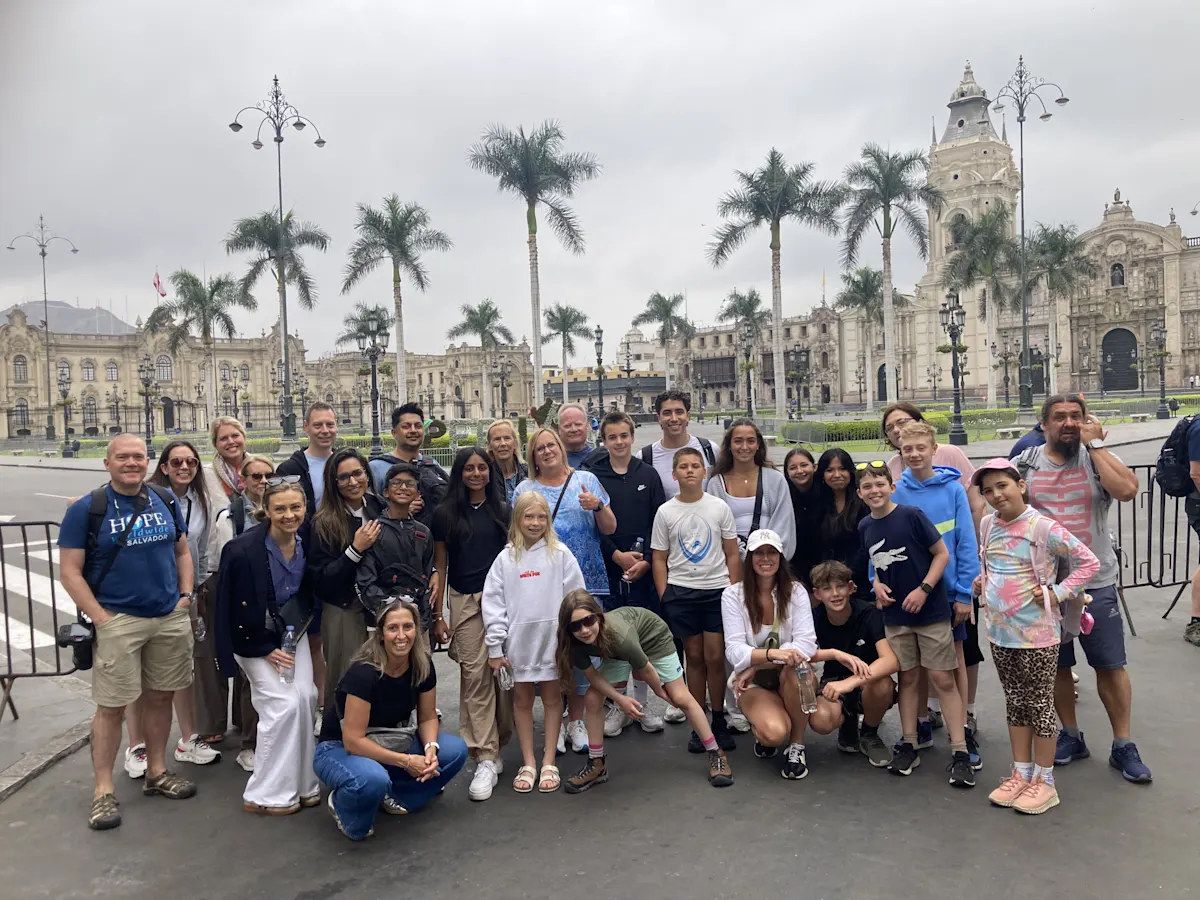 www.ndprep.orgBEYOND THE CLASSROOM: NDP STUDENTS EXPERIENCE LANGUAGE AND CULTURE IN PERU – A Catholic and Marist School | Notre Dame Prep | Pre K-12 Oakland County, MIBEYOND THE CLASSROOM: NDP STUDENTS EXPERIENCE LANGUAGE AND CULTURE IN PERU – Notre Dame Preparatory School provides an exemplary junior-kindergarten through high-school educational experience to students from families of diverse socio-economic means.
-
When Movement supports Language Learning and When It Does Not
 www.goethe.deWhen Movement supports Language Learning and When It Does NotFor several years now, movement has been a central topic in educational discourse. In various education systems, such as the Finnish one, learning is increasingly viewed as a holistic process in which cognitive, social and physical dimensions interact (Castro-Alonso et al., 2024). Interest in movement-based approaches has also been growing in the field of foreign language teaching. At the same time, many teachers are wondering what specific contribution movement can make to language learning. Is every form of movement automatically beneficial to the learning process, or can it sometimes distract from the actual learning objective?